
Table of Contents
The biggest myth in B2B vs B2C marketing is that they’re two different worlds. I’ve watched B2B companies drain the life out of perfectly good marketing because they think selling to businesses means sounding like a legal contract.
They strip away personality, suffocate stories with jargon and they convince themselves that professional means boring, that B2B buyers don’t respond to anything remotely human.
Here’s what I’ve learnt after years of working with everyone from solo consultants to enterprise teams: this self-imposed straightjacket is killing your marketing.
The assumption that B2B marketing must be stiff, formal, and devoid of emotion isn’t just limiting, it’s factually wrong. The myths we cling to about how business buyers think and decide are costing companies revenue, relevance, and real human connection.
Let me show you what I mean.
Myth 1: B2B is rational, B2C is emotional
This is the big one and the most stubborn myth in B2B vs B2C marketing, and the one that refuses to die.
We picture B2B buyers as logical robots, carefully weighing specs and ROI calculations in sterile conference rooms. Meanwhile, B2C customers supposedly impulse-buy based on feelings and Instagram ads.
The research tells a completely different story.
Research from B2B International found that emotions account for roughly 50% of B2B buying decisions. Not 5%. Not 10%. Half.
In fact, 56% of final B2B purchase decisions are driven primarily by emotion. Trust, confidence, and optimism shape these choices more than spreadsheets do.
Google’s research went even further. They discovered that B2B prospects are actually more emotionally invested in their purchases than B2C consumers. B2B buyers are almost 50% more likely to buy when they see personal value in a decision.
Think about that for a second.
When you’re buying software for your company, you’re thinking about how this makes you look. Will this decision boost your career? Will your team thank you or resent you? Will you be the person who brought in the tool that saved everyone time, or the one who wasted the budget?
A Fortune Knowledge Group survey of nearly 1,000 executives revealed that 65% used subjective and emotional reasoning as their primary basis for decisions. These are the same people who present rational business cases to justify what they already feel is right.
This is the emotional engine that B2B vs B2C marketing pretends doesn’t exist.
The spreadsheet comes after the gut feeling, not before.
Myth 2: B2B buyers don’t care about brand
I hear this one constantly: “We’re B2B. We don’t need brand work. We just need leads.”
Wrong.
This is one of the most expensive assumptions in B2B vs B2C marketing.
Brand matters more in B2B than in B2C. Not less, more.
Research from IE Insights confirms that brand drives B2B purchase decisions more strongly than consumer decisions. The stakes are higher. The risks are personal. The old expression captures it perfectly: “Nobody ever got fired for buying IBM.”
A LinkedIn study found that 52% of B2B decision-makers cited “the salesperson representing a well-known company with a strong professional brand” as the top factor influencing their initial engagement with sales.
That number has grown significantly in recent years.
Here’s why this happens: B2B buyers face higher personal risk. If you recommend a vendor and it goes badly, you don’t just lose money. You lose credibility. You lose political capital. You potentially lose your job.
When the risk is personal, brand becomes your safety net.
Google research showed that 86% of B2B buyers perceive no meaningful difference between suppliers. Your product probably isn’t as differentiated as you think. When everything looks the same on paper, trust becomes the differentiator.
That’s brand doing its job.
87% of B2B companies increased their brand investments over a five-year period, and 82% saw those investments pay off in increased sales and customer acquisition. These aren’t vanity metrics. This is revenue.
The trust and risk paradox nobody talks about
Let me tell you what’s really happening in B2B buying decisions.
Forrester’s Business Trust Survey revealed something uncomfortable: 43% of B2B buyers make defensive purchase decisions more than 70% of the time. Less than a third of buyers are genuinely risk-tolerant.
Trust is the real currency of B2B vs B2C marketing, and this is why.
Think about the psychology here.
B2B buyers expect rewards to flow to their organisation while risk flows to them personally. If the purchase works out, the company wins. If it fails, they take the heat.
This risk-reward gap explains why so many B2B decisions feel conservative. Buyers aren’t being difficult. They’re being rational about their careers.
B2B purchases carry significant personal stakes. You’re not just spending company money. You’re betting your reputation, your time, and your credibility on being right.
When buyers trust a company, they’re almost twice as likely to recommend that company or pay a premium to work with them. Trust gets built through three things: competence, consistency, and dependability.
Not through feature lists and not through aggressive sales tactics.
Through showing up reliably and doing what you said you’d do.
Myth 3: The lines are blurring between B2B and B2C
People love saying “the lines are blurring.” It sounds sophisticated.
Fun fact: the lines were never as solid as we pretended.
Millennials now make up an estimated 73% of B2B buyers. They expect the same convenience buying business solutions as they get shopping on Amazon. According to research from Zoovu and Forrester, 73% of B2B buyers expect this parity between their personal and professional buying experiences.
The internet made it impossible to maintain separate identities. We bring our consumer behaviours into business situations. We bring our professional scepticism into personal purchases.
Marketing psychology experts confirm what feels obvious: “It’s a mistake to assume that B2B is entirely different from B2C, as both ultimately involve humans.”
Organisations try to implement systems and processes to remove emotion from purchases. But humans still make the final call, which means decisions are never completely logical.
You can’t systematise away human nature.
The real B2B vs B2C marketing framework: it’s all Human 2 Human (H2H)
Here’s what I’ve come to understand after working with dozens of companies across industries:
B2B and B2C are both Human to Human.
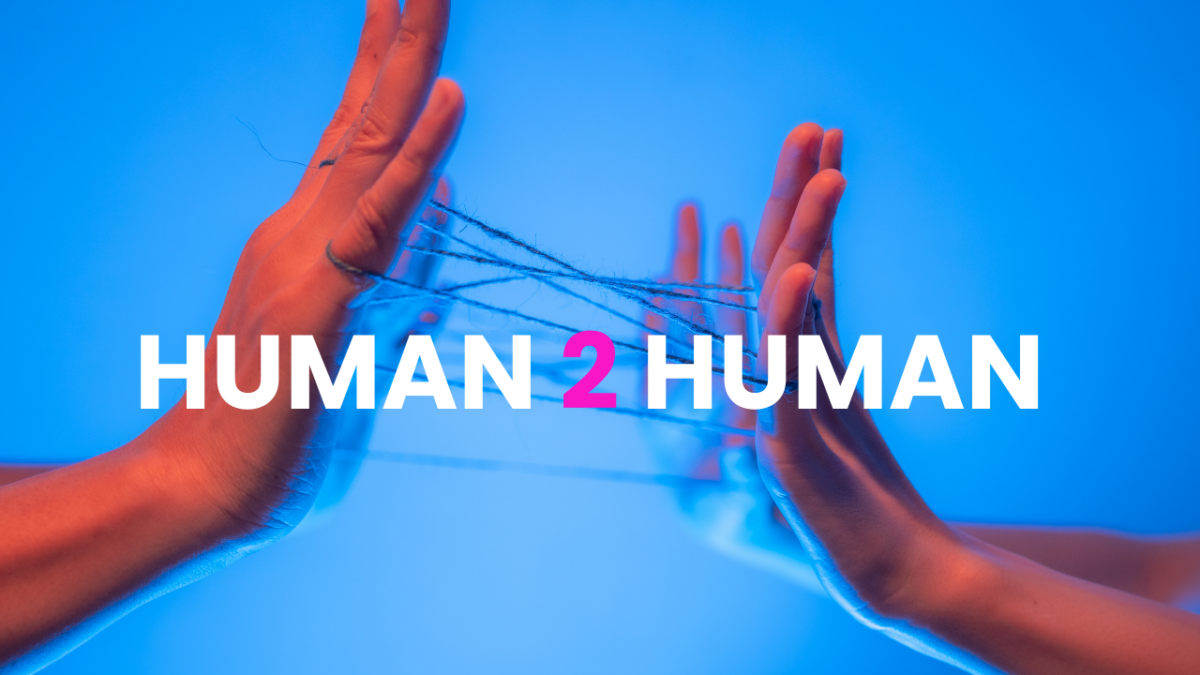
It’s individuals within organisations who evaluate options, make choices, and buy your products. The complexity changes. The committee size changes. The approval process changes.
But the fundamental psychology doesn’t.
People connect with stories and images far more easily than they connect with data. Research shows we remember emotionally resonant storytelling up to 22 times better than cold facts.
This applies even to the most data-driven business buyers.
Foundational marketing strategies rooted in understanding human behaviour transcend audience type. Whether you’re selling to consumers or companies, you’re ultimately targeting people.
This human-centric reality shapes how people make buying decisions, the emotions involved, and the need for authentic connection.
What SMEs get wrong when copying enterprise tactics
I see this pattern repeatedly with smaller companies.
They look at what big enterprise companies do and try to copy it. They build complex lead scoring systems. They create elaborate nurture sequences. They obsess over account-based marketing frameworks.
Then they wonder why it doesn’t work.
Here’s what they miss: enterprise tactics are designed to solve enterprise problems.
When you have 50,000 leads coming in monthly, you need automation and scoring to manage the chaos. When you have a 12-person sales team covering global territories, you need sophisticated routing and assignment rules.
When you’re a consultancy with 200 contacts in your CRM and two people doing business development, you need something completely different.
You need to actually know your prospects. You need to have real conversations. You need to build relationships that matter, not optimise funnel conversion rates.
The best SME marketing I’ve seen focuses on a few things done exceptionally well:
- Building genuine relationships with a smaller group of ideal customers rather than broadcasting to everyone.
- Creating content that demonstrates expertise through teaching and sharing, not through talking about how great the company is.
- Being consistently present in the channels where your buyers actually spend time, not where marketing blogs say you should be.
- Making it easy for people to buy by removing friction and confusion from your process.
A small consultancy I worked with spent six months building an elaborate marketing automation system. They had lead magnets, email sequences, and scoring models.
It generated three qualified leads.
Then they tried something simpler. They identified 50 companies they wanted to work with. They researched each one. They reached out personally with specific ideas relevant to each business.
They booked 12 meetings in the first month.
The difference wasn’t the tactic. It was understanding what problem they actually needed to solve.
6 Practical takeaways for founders and marketing leads
Stop letting outdated B2B vs B2C marketing myths drain the life from your marketing. Start asking who you’re trying to reach and what actually matters to them.
- Focus on building trust before anything else. Trust drives recommendations, referrals, and premium pricing. It takes time to build and seconds to destroy. Be competent, consistent, and dependable.
- Invest in your brand even if you think you don’t need to. Your brand is your reputation made visible. It’s what people say about you when you’re not in the room. It’s the reason someone picks up the phone when you call.
- Understand the personal stakes for your buyers. They’re not just evaluating your product. They’re thinking about how this decision affects their career, their team, and their standing in the organisation.
- Make emotional connection part of your strategy. This doesn’t mean being manipulative. It means recognising that people make decisions based on how they feel, then justify those decisions with logic.
- Simplify your approach if you’re a smaller company. You don’t need enterprise-grade complexity. You need clarity, consistency, and genuine relationships with the right people.
- Remember that people buy from people. Even in the most formal B2B contexts, humans are making the final decisions. They want to work with companies they trust and people they like.
The question you should be asking
Here’s what I want you to think about:
Which of these myths is currently shaping your marketing strategy?
Are you avoiding brand work because you think B2B buyers don’t care? Are you creating purely rational content because you assume emotion doesn’t matter? Are you copying enterprise tactics that don’t fit your reality?
The companies that win don’t obsess over whether they’re B2B or B2C. They obsess over understanding the humans they serve.
The entire B2B vs B2C marketing debate misses the point.
They build trust, they reduce risk and they make it easy for people to say yes.
That’s not B2B marketing or B2C marketing.
That’s just good marketing.
If you enjoyed this read, give it a like and subscribe if you haven’t already and check out my other articles on LinkedIn.
With love, Sidi
Your On-Demand Marketer
Helping businesses and founders turn marketing into revenue, without wasting time or budget. 💖💙